If you’ve ever written a blog post, YouTube title, or article heading, you’ve probably used Online Title Case Converter even if you didn’t realize it.
Title case is one of the most common capitalization styles used in English writing. It makes headings look clean, professional, and easy to read.
But what exactly is title case? And when should you use it?
Let’s break it down in simple terms.
What Is Title Case?
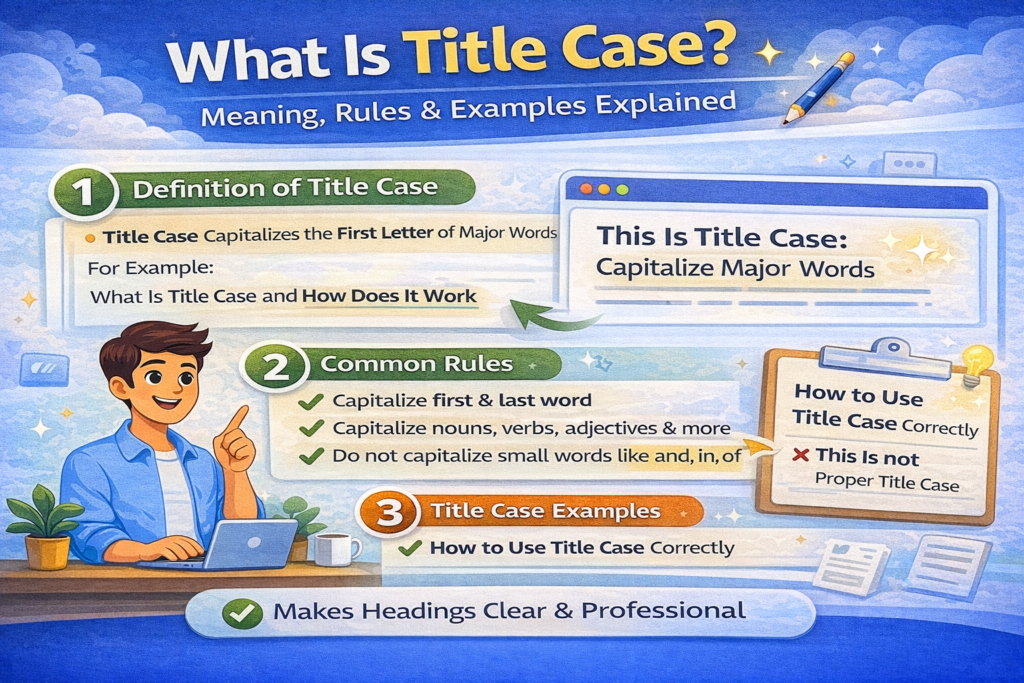
Title Case is a capitalization style where the first letter of major words in a sentence or heading is capitalized.
For example:
Why Is It Called “Title Case”?
It’s called title case because it is most commonly used in:
- Book titles
- Blog post titles
- Article headlines
- Web page headings
- Video titles
It gives content a structured and polished appearance, making it stand out from normal paragraph text.
Basic Rules of Title Case
While style guides may vary slightly, here are the most common rules:
1. Capitalize the First and Last Word
Always capitalize the first and last word of the title.
Example:
2. Capitalize Major Words
Major words include:
- Nouns (Guide, Case, Text)
- Verbs (Convert, Change, Write)
- Adjectives (Online, Simple, Fast)
- Adverbs (Quickly, Easily)
Example:
How to Convert Text Quickly and Easily
3. Do Not Capitalize Small Words (Usually)
Small words like:
- and
- or
- but
- in
- on
- of
- to
- at
are usually written in lowercase unless they are the first or last word.
Example:
Lowercase vs Uppercase: What Is the Difference?
Title Case vs Sentence Case
People often confuse these two formats.
Title Case:
Sentence Case:
The difference is simple:
- Title case capitalizes most important words.
- Sentence case capitalizes only the first word (and proper nouns).
For headings and blog titles, title case is generally more common.
When Should You Use Title Case?
Title case works best for:
- Blog article titles
- Landing page headings
- Email subject lines
- Video titles
- eBook titles
- Section headings in long-form content
It makes headings easier to scan and visually balanced.
When Should You Avoid Title Case?
Title case is not ideal for:
- Long paragraphs
- Casual messages
- Informal chats
- Body content
Using title case inside normal text can look unnatural and distracting.
Does Title Case Affect SEO?
Directly? No.
Google does not rank content higher simply because it uses title case.
Indirectly? Yes.
Here’s how:
- Title case improves readability
- Clear headings increase engagement
- Better engagement can improve click-through rate
- A well-formatted title looks more trustworthy
For example:
❌ how to convert text online
✅ How to Convert Text Online
The second one looks more professional and clickable.
Common Title Case Mistakes
Here are mistakes many writers make:
- Capitalizing every single word
- Not capitalizing important words
- Mixing sentence case and title case
- Using inconsistent formatting across the site
Consistency matters more than strict perfection.
How to Convert Text to Title Case Easily
Instead of manually capitalizing each word, you can use an online case converter tool to:
- Instantly convert text to Title Case
- Fix formatting errors
- Maintain consistency across headings
- Save time on editing
This is especially helpful when formatting multiple blog titles or large text sections.
Quick Title Case Examples
Lowercase:
Title Case:
Sentence Case:
Small formatting changes like this can significantly improve presentation.
Final Thoughts
Title case is one of the most widely used capitalization styles in digital content. It gives headings a clean, structured, and professional appearance without being overly aggressive like ALL CAPS. If you write blog posts, create video content, or publish articles regularly, understanding title case helps you maintain consistent and polished formatting. Used correctly, title case improves clarity, presentation, and user experience all small details that make a big difference in professional writing.
FAQs
Q: What is title case in writing?
A: Title case is a capitalization style where the first letter of major words is capitalized.
Q: Which words are capitalized in title case?
A: Nouns, verbs, adjectives, adverbs, and the first and last words are usually capitalized.
Q: Should small words be capitalized in title case?
A: Small words like “and,” “of,” or “to” are usually lowercase unless they are the first or last word.
Q: Is title case good for SEO?
A: Title case improves readability and presentation, which can support better user engagement.
Q: How do I convert text to title case quickly?
A: You can use an online case converter tool to automatically apply title case formatting.
Read Also
- How to Remove Special Characters from Text Online Free Without Login
- Convert Text Case In Html Content Quickly
- Convert Text Case for CSV Files Online – Accurate & Effortless
- Bulk Convert Text Case for Large Content
- How To Convert Mixed Case Text To Proper Case
- Fix Incorrect Capitalization In Copied Text Online
- Convert Text To Title Case For YouTube Titles: The Ultimate Guide
- Change Text Case in Notepad++ Easily (Guide With Real Use Cases)
- Convert Sentence Case In Bulk Online Free
- Convert Lowercase To Uppercase In Google Docs Automatically