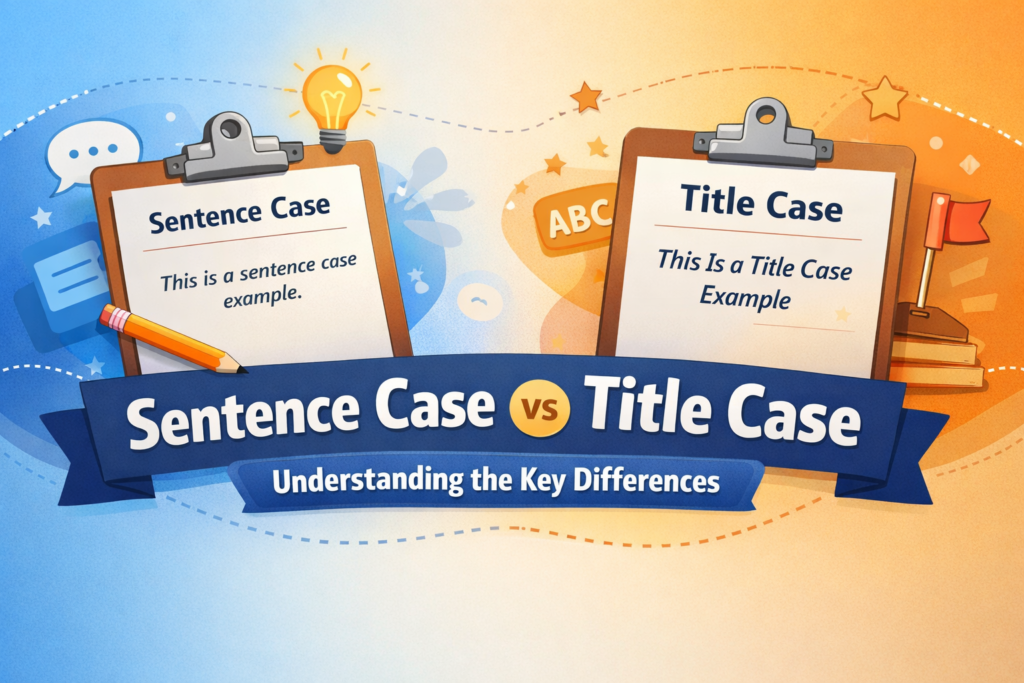
When writing headlines, blog posts, emails, or website content, text formatting style matters more than people realize. Two of the most commonly used capitalization styles are Sentence Case and Title Case.
Both formats help make text easier to read, but they are used in different situations. Understanding the difference between Sentence Case and Title Case Converter can help you write more professionally and improve the clarity of your content.
In this guide, we’ll explain what each style means, how they differ, when to use them, and examples that make everything easy to understand.
What Is Sentence Case?
Sentence case is a writing style where only the first word of the sentence and proper nouns are capitalized, while the rest of the words remain lowercase.
This format is commonly used in:
- Normal writing
- Blog content
- Email messages
- Article paragraphs
- Instructions and documentation
Example of Sentence Case
Sentence case:
“This is an example of sentence case formatting.”
Here you can see:
Only the first word begins with a capital letter.
All other words are written in lowercase, unless they are proper nouns.
When Sentence Case Is Used
Sentence case is typically used when the goal is natural and readable text. It feels similar to normal speaking and is widely used in digital writing.
Common places where sentence case appears:
- Blog post headings (sometimes)
- Article paragraphs
- Email subject lines
- Mobile app interfaces
- Social media captions
What Is Title Case?
Title case is a formatting style where major words start with capital letters. Smaller words such as articles and conjunctions may remain lowercase depending on style rules.
This style is commonly used for:
- Blog titles
- Book titles
- Headlines
- Page titles
- Video titles
Example of Title Case
Title case:
“This Is an Example of Title Case Formatting”
Notice that:
Important words begin with capital letters.
Words like an, of, the may stay lowercase depending on the style guide.
When Title Case Is Used
Title case is used when text needs to stand out visually, especially in headings or titles.
You will often see it used in:
- Article headlines
- YouTube titles
- Blog post titles
- Website page headings
- Book and movie titles
Key Difference Between Sentence Case and Title Case
Although both formats deal with capitalization, their purpose and appearance are quite different.
| Feature | Sentence Case | Title Case |
|---|---|---|
| Capitalization | Only first word and proper nouns | Major words capitalized |
| Appearance | Simple and natural | Bold and headline-style |
| Common Usage | Sentences, paragraphs, UI text | Headlines, titles, headings |
| Readability | Feels like normal writing | More attention-grabbing |
Example Comparison
Sentence case:
“How to convert text to uppercase online”
Title case:
“How to Convert Text to Uppercase Online”
Both are correct the choice depends on context and writing style.
Why Capitalization Style Matters
Using the right capitalization format improves clarity, readability, and professionalism.
Here are a few reasons why it matters:
1. Better Readability
Proper capitalization makes text easier to scan and understand quickly.
2. Professional Appearance
Well-formatted titles and headings look more polished and organized.
3. SEO Benefits
Search engines display titles in search results. Using the correct style can improve click-through rates.
4. Consistent Writing Style
Using one capitalization style consistently across your website or blog creates a better user experience.
Sentence Case vs Title Case: Which One Should You Use?
The choice between sentence case and title case depends on where the text appears.
Use Sentence Case when writing:
- Article paragraphs
- Email messages
- Instructions
- App interface text
Use Title Case when writing:
- Blog post titles
- Headlines
- Page titles
- Video titles
Many modern websites prefer sentence case for UI text because it feels more natural to readers.
Quick Tips for Using Capitalization Correctly
Here are some simple tips to follow:
- Use sentence case for normal writing and descriptions.
- Use title case for headings and titles.
- Keep capitalization consistent across your content.
- Follow the same format throughout your blog or website.
Consistency is more important than choosing one specific style.
FAQs
Q: What is the main difference between sentence case and title case?
A: The main difference is capitalization. Sentence case capitalizes only the first word and proper nouns, while title case capitalizes most major words in a title.
Q: Which is better for blog titles: sentence case or title case?
A: Most blogs use title case for headlines because it looks more prominent and easier to scan in search results.
Q: Do all words get capitalized in title case?
A: No. Small words like and, of, the, in, or, a, an are usually not capitalized unless they appear at the beginning of the title.
Q: Is sentence case more natural for readers?
A: Yes. Sentence case feels closer to normal writing and is often used for paragraphs, instructions, and user interface text.
Q: Can I use sentence case for headings?
A: Yes. Many modern websites and design systems use sentence case for headings because it looks cleaner and more natural.
Q: Are capitalization styles important for SEO?
A: While capitalization itself doesn’t directly affect rankings, properly formatted titles can improve readability and click-through rates, which may indirectly benefit SEO.
Read Also
- Best Ways to Clean Messy Text Online (Complete Guide for Fast Text Formatting)
- How to Remove Special Characters from Text Easily
- Social Media Character Limits Explained (Complete Guide)
- Character Counter vs Word Counter: What’s the Difference?
- Why Word Count Matters in Content Writing
- Word Count Tips for Bloggers and Students
- Best Free Word Counter Tools for Writers
- How to Count Words in an Essay Online
- What Is a Word Counter Tool and Why You Need It
- Difference Between Uppercase and Lowercase Text